
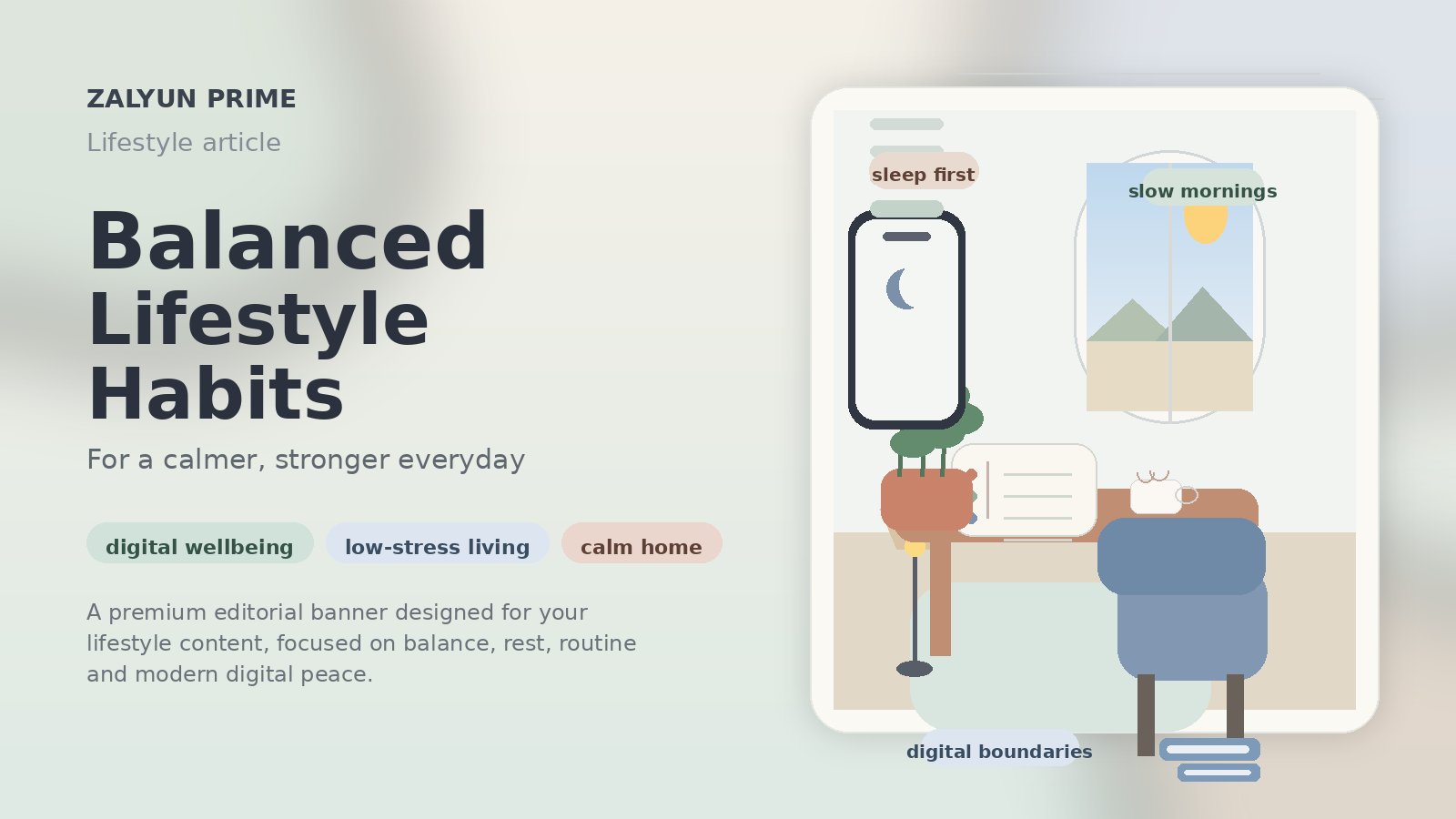
Most lifestyle advice fails for one simple reason: it tries to decorate a life that is structurally exhausting. It offers prettier planners, stricter routines and polished ideas, while people are still dealing with broken sleep, digital overload, crowded commutes, money pressure and minds that never properly switch off. That is why so many readers consume “better life” content without actually feeling better.
At Zalyun Prime, we believe lifestyle advice should do more than sound inspiring. It should give people something useful, practical and quietly life-changing. Not a fantasy version of self-improvement. Not a routine built for perfect days. A real one.
A better lifestyle is not about becoming a different person. It is about creating a healthier daily rhythm that makes ordinary life feel lighter, steadier and more human. That means less friction, less noise and fewer habits that secretly drain energy. It also means more clarity, more calm and more attention to the small systems that shape how we live.
This is where balanced lifestyle habits matter. They help people protect their energy, organise their day with less stress, enjoy home life more deeply, and feel more present in their own routine. The good news is that none of this requires a dramatic reinvention. It starts with noticing what makes life feel heavier than it needs to be, and then changing that with care.
Not Broken
One of the most important lessons in modern wellbeing is this: many people are not failing, they are overloaded. There is a difference. A person can be capable, intelligent and hardworking, and still feel scattered because their day is full of invisible strain. Notifications. Poor sleep. Unfinished admin. Clutter. Irregular meals. Low-level financial worry. Too much input and not enough recovery.
When life feels messy, people often assume they need more discipline. In reality, they often need less friction. That shift matters because shame rarely produces stable change. Understanding does. A good lifestyle starts with a better question. Not “What is wrong with me?” but “What in my daily life keeps wearing me down?”
That question changes everything. It moves you from blame to design. It turns lifestyle from a performance into a repair job. And once you begin to see daily stress as a systems problem rather than a personal flaw, progress becomes much more realistic.
The Cause
Most lifestyle problems do not begin with a lack of ambition. They begin with broken rhythms. People wake up tired, skip breakfast, answer messages while half-dressed, work without proper breaks, scroll to “switch off”, eat whenever they remember, and then wonder why they feel flat by evening.
The body does not respond to intention. It responds to conditions. If the day feels rushed, noisy, bright, unfinished and reactive, the nervous system stays busy even when the mind wants peace. That is why a realistic self-care routine is not about piling more tasks on top of an already strained life. It is about removing what keeps the body in low-level stress.
A better lifestyle is often less about adding and more about protecting what should have been basic all along: regular meals, light, movement, real pauses, better sleep, quieter evenings, and space to think before reacting. When these foundations improve, the rest of life becomes easier to hold.
Less Friction
One of the smartest ideas in lifestyle design is also one of the simplest: make helpful choices easier than unhelpful ones. Good habits become far more likely when they require less effort at the point of action.
Leave a water bottle where you work. Put fruit where you can see it. Charge your phone away from the bed. Keep walking shoes near the door. Put a notepad in the kitchen for tomorrow’s top priorities. Keep an easy lunch option ready for the busy days that will absolutely happen.
This may not look dramatic, but it works because people do not only follow motivation. They follow convenience. On tired days, rushed days and emotionally cluttered days, environment often decides behaviour before willpower gets a chance. Balanced lifestyle habits succeed when they are built into daily life rather than depending on perfect energy.
In other words, a better life is often less about pushing harder and more about making the right thing easier to do.
Morning Light
A good morning does not need to be glamorous. It does not require a 5 a.m. alarm, a cold plunge, ten supplements and a camera-ready kitchen. What it needs is steadiness.
The first part of the day shapes the emotional tone of everything that follows. If the morning begins with panic, rushing and notifications, the mind enters reaction mode before the day has properly started. If it begins with a little space, the day feels different.
Light helps. Water helps. A few phone-free minutes help. So does choosing one priority before the noise of the world rushes in. Even a ten-minute routine can change the quality of a morning: open the curtains, drink water, wash properly, breathe, stand at the window, step outside for a minute, and decide what matters most today.
The point is not productivity theatre. The point is to begin the day as a person rather than a response system. A healthier daily rhythm nearly always starts with a calmer first half-hour.
Digital Peace
A strong digital wellbeing routine is now one of the most useful forms of self-protection. Most people underestimate how much attention they lose through casual checking. A quick glance becomes twenty minutes. A harmless scroll becomes bad news, comparison, shopping temptations, and five open loops in the mind.
Technology is not the enemy. Unchecked digital spillage is. The real goal is not abstinence. It is placement. Your phone should be a tool, not the director of your mood.
That means turning off non-essential alerts, moving social apps away from the front screen, keeping meals phone-free, and protecting the first and last part of the day from aimless scrolling. It also means deciding when you check messages instead of letting messages decide when they check you.
Many people try meditation before they try boundaries. Both can help, but boundaries often work faster. If this is an area you want to improve, our digital wellbeing guide is a natural next step after this article.
Food Rhythm
Food habits are often discussed in extreme terms, but most people do not need a dramatic overhaul. They need rhythm. When meals are constantly delayed, grabbed on the go, or skipped entirely, mood and concentration suffer long before the body makes a bigger complaint.
A steady food rhythm helps people feel more emotionally even. That means a proper breakfast rather than caffeine on an empty stomach, a lunch that supports the afternoon instead of sabotaging it, and a simple plan for evenings that are always busier than expected.
The most effective low-stress living habits are the ones that survive real life. Eggs, yoghurt, soup, oats, frozen veg, nuts, rice, beans, leftovers, toast with something nourishing on top. These are not glamorous meals, but they protect energy. And protected energy leads to better decisions in every other area.
Perfection is fragile. Rhythm is resilient. The best lifestyle habits are not the ones that impress people. They are the ones that quietly keep you well.
Move More
Movement is often sold as a body goal, but it is really an energy goal. It improves mood, circulation, posture, focus and confidence. It also helps people leave their heads and return to their bodies, which many modern routines fail to do.
The mistake is believing that movement only counts when it is intense. That idea stops people before they begin. In reality, a healthier daily rhythm is built through ordinary, repeated movement. A walk after lunch. Stretching while the kettle boils. Taking the stairs. Ten minutes of strength work at home. Walking to the shop instead of automatically driving.
These things matter because the body likes consistency more than drama. Short, regular movement often does more for wellbeing than ambitious exercise followed by long gaps. A balanced lifestyle is not built on heroic bursts. It is built on repeated acts of care that still happen when the day is not ideal.
Home Calm
The state of a home affects the state of a mind more than many people realise. You do not need a picture-perfect space. You need one that supports your life instead of quietly working against it.
A cluttered hallway creates stress the moment you walk in. A bedroom full of random items makes it harder to rest. A kitchen with no usable surface makes simple cooking feel irritating. These are not trivial details. They are background pressures that build up.
Mindful home habits are not about expensive storage or trend-led décor. They are about making daily life smoother. Clear one surface. Give keys and chargers a fixed place. Open a window. Use softer lighting in the evening. Keep cleaning supplies where they are easy to reach. Make the bed. Create one corner that feels calm on purpose.
A calmer home lowers the number of tiny frustrations a person carries through the day. And that matters, because many people are not defeated by one large problem. They are worn down by fifty small ones.
Work Lines
Modern work has a habit of spreading into every part of life. A late message becomes normal. Lunch disappears. Evenings stay mentally “on”. People finish the day tired without ever having felt properly done.
This is why boundaries are not a luxury. They are a lifestyle skill. A healthier work-life rhythm depends on clearer edges: stepping away for lunch, setting a final email check, making a proper list for tomorrow, and creating a visible transition between work mode and personal time.
If you work from home, this matters even more. The brain needs signals. Shut the laptop. Tidy the desk. Change clothes. Step outside for five minutes. Put work items away. These acts may seem small, but they tell the nervous system that one role has ended and another has begun.
Without boundaries, recovery never fully starts. And without recovery, even a successful life begins to feel strangely empty.
Social Fuel
Lifestyle is often treated as a private project, but people do not thrive in isolation. Connection is a form of nourishment. It steadies perspective, softens stress and reminds people that life is not only a list of tasks.
Many adults are lonelier than they sound. They are busy, connected online, and still emotionally underfed. That is why one of the most effective low-stress living habits is to make connection easier and more ordinary. Not bigger. Easier.
Send the message. Suggest tea. Arrange a short walk. Sit with family without screens. Visit someone before the moment becomes “special enough”. Community is not built through grand gestures. It is built through repetition and willingness.
A better lifestyle is not only about how you eat, sleep or organise your diary. It is also about whether your life contains people who know your voice when it is tired, happy, uncertain or real.
Money Ease
It is difficult to feel calm when money feels chaotic. That does not mean wellbeing belongs only to the wealthy. It means financial clarity is part of emotional clarity.
Money stress becomes heavier when it is vague. The mind fills in the blanks with fear. That is why even a simple system helps: know what is coming in, know what is going out, automate essentials where you can, and remove the mystery. Delay impulse purchases. Ask whether something solves a real problem or only offers a momentary lift.
Some of the most effective lifestyle upgrades cost very little. Cooking at home more often. Using the library. Borrowing instead of buying. Walking. Repairing what you own. Planning simple weekends that feel good without forcing spending. A calmer life is not always built through addition. Often it is built through appreciation, intention and a lower level of financial noise.
Money ease does not mean endless money. It means less confusion around the money you have.
Sleep First
Sleep is still one of the most overlooked foundations of a good lifestyle. People borrow time from the night and expect the next day to absorb the cost. It rarely does.
Poor sleep makes everything harder: patience, focus, appetite, emotional control, motivation and decision-making. In other words, many lifestyle goals become difficult not because people are lazy, but because they are tired in a way that keeps repeating.
A realistic self-care routine often begins with a better evening. Dim the lights earlier. Lower the stimulation. Write down tomorrow’s worries instead of mentally carrying them into bed. Keep the bedtime more consistent. Avoid letting the final part of the day dissolve into scrolling and mental leftovers.
The last thirty minutes before sleep matter because they teach the body what kind of night to expect. If the evening is chaotic, sleep usually follows suit. If it is slower, quieter and more repetitive, the body begins to settle. Sometimes the most life-changing habit is simply learning how to stop properly.
Less Comparison
A great deal of lifestyle stress comes from comparison. People see someone else’s polished routine and immediately feel behind in their own life. They copy habits that do not fit their job, health, finances, family responsibilities or temperament, and then blame themselves when the borrowed system fails.
Comparison is a poor architect. It produces imitation, not alignment.
The more useful question is not “What works for other people?” but “What genuinely supports me?” Some people need early quiet. Others need slower mornings. Some need more structure. Others need less pressure and more breathing room. A life that works quietly is far better than one that only looks impressive from the outside.
Balanced lifestyle habits should fit your actual life. Your flat. Your schedule. Your budget. Your nervous system. Your energy. Lifestyle becomes powerful when it stops being a costume and starts becoming a truthful structure.
Seasons
A healthy lifestyle is flexible. Winter energy is not summer energy. A demanding month at work is not a peaceful one. A stressful family period is not the time to expect peak performance from yourself.
Real wellbeing improves when people stop demanding the same output from themselves in every season. Some periods are for building. Others are for maintaining. Some are for recovery. Wisdom lies in knowing the difference.
This might mean earlier nights during darker months, simpler meals during intense weeks, fewer social obligations when energy is low, or more time outside when life feels mentally crowded. The point is not inconsistency. The point is intelligent adjustment.
Rigid routines often look strong, but they break easily. Adaptable routines tend to last. The best balanced lifestyle habits bend without collapsing. They leave room for real life, and because of that, they remain useful even when life shifts.
Weekend Reset
A good week often begins with a gentle reset. That is why a weekend reset routine can be so helpful. It turns Sunday from a place of dread into a place of support.
The best reset is simple. Change the bedding. Do a quick food check. Wash what you need for Monday. Clear the main surfaces. Review the diary. Put clothes ready. Refill the basics. Ask one useful question: what will make this week feel lighter?
This takes less time than the stress caused by ignoring it. And the emotional return is bigger than people expect. Preparation is calming because it reduces uncertainty. It gives Monday fewer chances to begin in chaos.
If this habit speaks to you, our weekend reset routine goes deeper and shows how one quiet hour can protect the next five days.
Quiet Joy
Not every good habit needs to be productive. A strong lifestyle also needs joy that is quiet, grounding and real.
Read a few pages. Water the plants. Sit outside with tea. Bake something simple. Mend a shirt. Visit the market. Listen to an album all the way through. Keep flowers on the table. Learn a skill slowly. Do something that does not need to be measured in efficiency.
This matters because people do not only burn out from hard work. They also burn out from living with no texture except obligation. Quiet pleasure restores depth to the day. It reminds the mind that life is not only a sequence of tasks to survive.
A calmer, more meaningful life is not built by removing all effort. It is built by making sure effort is not the only thing left.
Real Change
The most hopeful truth in lifestyle advice is that real change does not require a dramatic reinvention. It requires honesty, repetition and kindness. A better life is not built in one perfect week. It is built when you notice what drains you, protect what steadies you, and keep returning to habits that make everyday life feel more human.
That is the heart of balanced lifestyle habits. They do not ask you to become flawless. They ask you to become more aware of the systems shaping your days. They help you see that energy is precious, attention is worth guarding, and peace is often built through small decisions that look ordinary from the outside.
At Zalyun Prime, that is the kind of lifestyle content we care about: useful, grounded and genuinely helpful. If this article gave you something valuable, continue with our digital wellbeing guide and mindful home habits for your next practical step towards a calmer everyday life.
FAQs
What are balanced lifestyle habits?
Balanced lifestyle habits are everyday routines that support energy, focus, rest, relationships and peace of mind without becoming extreme or unrealistic. They help create a healthier daily rhythm by making good choices easier to repeat.
How do I start a digital wellbeing routine?
Start small. Turn off non-essential notifications, keep your phone away from the bed, reduce early-morning scrolling, and create message-checking windows. A strong digital wellbeing routine lowers mental noise instead of banning technology completely.
What is a weekend reset routine?
A weekend reset routine is a simple set of tasks that makes the coming week feel lighter. It often includes tidying key spaces, checking food, washing clothes, planning meals, reviewing the diary and preparing for Monday.
Can low-stress living habits work on a tight budget?
Yes. Many low-stress living habits cost little or nothing. Walking, planning meals, borrowing books, improving sleep, cooking at home, reducing impulse spending and building mindful home habits are all affordable ways to feel more grounded.
Why do mindful home habits matter?
Mindful home habits reduce background stress. When essentials have a place, surfaces are clearer and routines are simpler, daily life becomes less irritating. A calmer home supports better decisions, better rest and a more settled mood.
What is a realistic self-care routine?
A realistic self-care routine fits your real life. It includes sleep, regular meals, boundaries, movement, rest and small moments of enjoyment. It is not performative. It is sustainable, flexible and supportive.
How long does it take to build balanced lifestyle habits?
It varies, but consistency matters more than speed. Most people notice change when they repeat a few useful habits steadily rather than trying to transform everything at once. A good lifestyle grows through rhythm, not pressure.