A Hopeful View of Modern UK Life
Across Britain, many people are asking the same question: how do we protect our cultural identity without shutting out change? It is a fair concern. From quieter high streets to fading local traditions, many communities feel as though something important has been slipping away. Yet this is not a story of decline. It is a story of renewal.
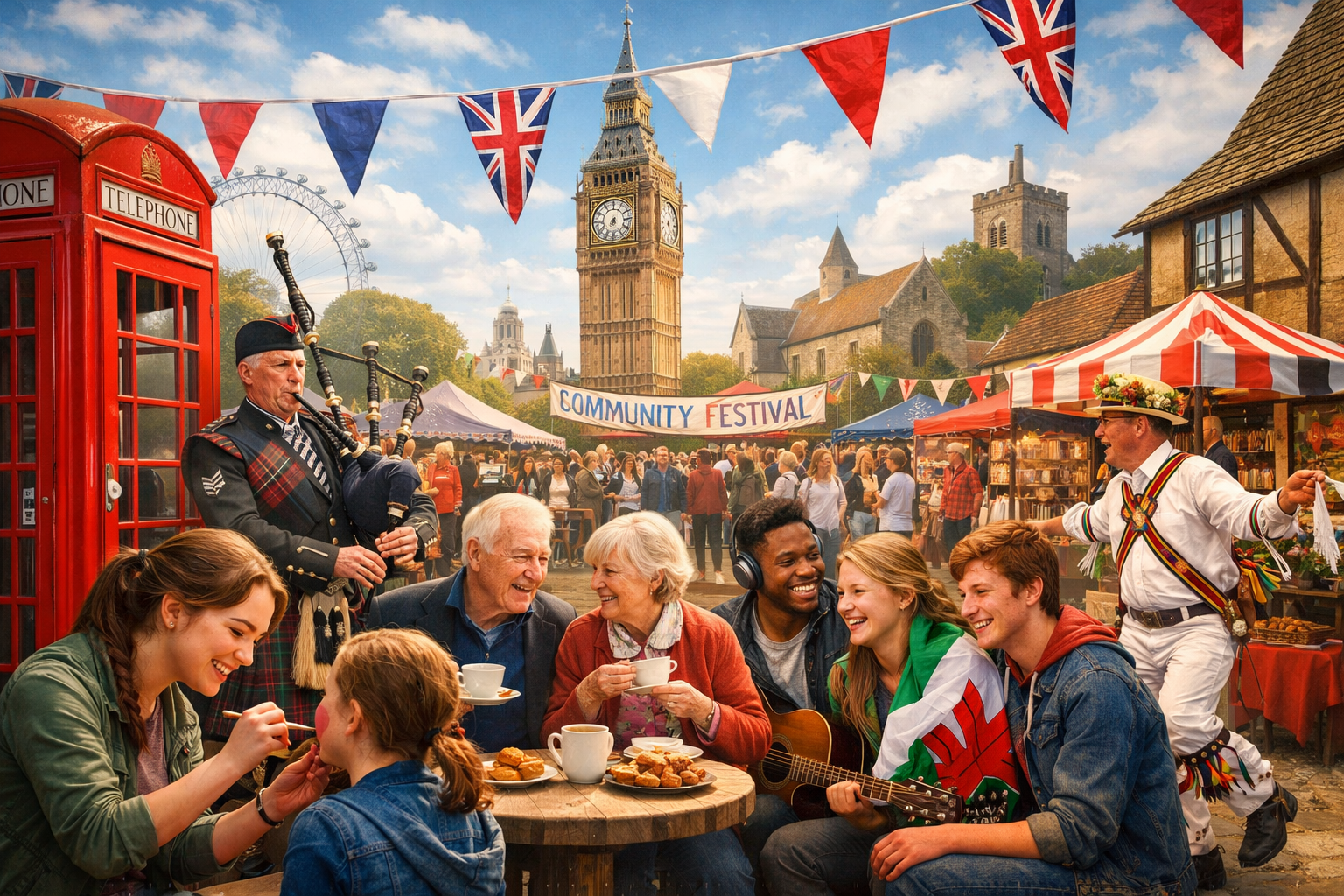
The real strength of modern British cultural life lies in its ability to hold both memory and movement at the same time. The United Kingdom has always been shaped by layers of history, regional pride, and new influences. From Welsh community festivals to Scottish storytelling, from Northern Irish music traditions to English market town heritage, culture in Britain has never been one fixed idea. It has always grown through people, place, and participation.
That is why the answer to today’s cultural challenges is not panic. It is practical care. If we want to strengthen cultural belonging in Britain, we need to invest in the places where culture actually lives: libraries, local arts venues, youth clubs, museums, community halls, public parks, faith spaces, and independent cafés. These are not small things. They are the everyday settings where trust, identity, and neighbourly connection are built.
There are clear ways to move forward. Communities can support local heritage projects in the UK, revive neighbourhood festivals, protect regional dialects, encourage school arts programmes, record family histories, celebrate migrant stories, reopen public conversation across generations, and make town centres feel welcoming again. These actions do more than preserve tradition. They help people feel less isolated, more rooted, and more hopeful about where they belong.
A healthier future for British community culture depends on confidence, not fear. Heritage matters because it gives people roots. Inclusion matters because it keeps culture alive. When these two values work together, they create something stronger than nostalgia: they create shared purpose.
In 2026, the most hopeful vision for Britain is not a perfect return to the past. It is a more connected future, built on respect for regional traditions in the UK, local creativity, and everyday participation. Culture is not only something to admire. It is something to keep alive, together.
FAQ
What is cultural belonging in Britain?
Cultural belonging in Britain means feeling connected to local history, shared traditions, community spaces, and everyday social life.
Why does British community culture matter?
It helps people feel rooted, supported, and proud of where they live, while also strengthening trust between different groups.
How can local heritage projects help UK communities?
They protect stories, restore pride in place, and give younger generations a stronger link to their area’s identity.
What are examples of regional traditions in the UK?
They include local festivals, music, accents, crafts, food traditions, storytelling, and community celebrations tied to specific places.
Can culture improve life in British towns?
Yes. Strong local culture can bring people together, support wellbeing, improve town centre life, and rebuild community spirit.